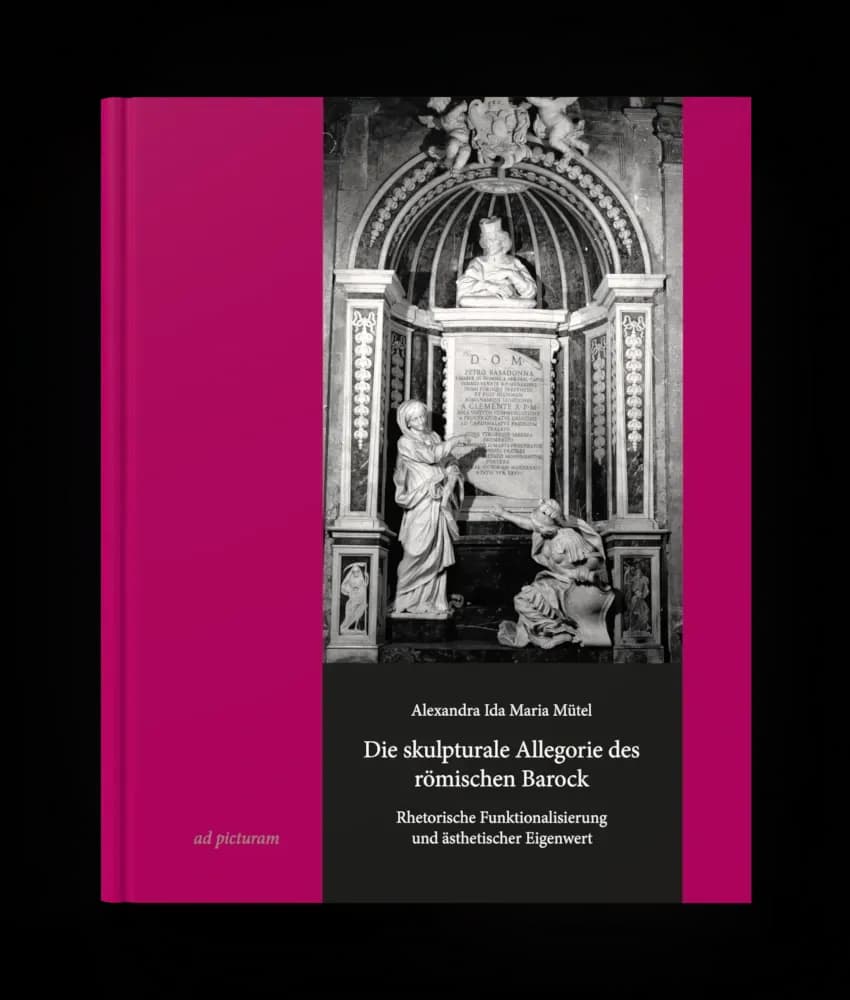
Making abstract, complex content clear, especially through “bulky,” expansive sculpture, was a special challenge that spurred the artists to creative solutions and top performances. The range extends from simple representations of the virtues to moving multi-figure compositions that depict entire trains of thought. In a similar way, the individual sculptural allegory fluctuates between its role as a carrier of meaning in larger complexes of works and its effect as a self-contained, aesthetic object.
The focus of the book is Rome as the baroque art center with international appeal. The sculpture is examined in a sacred context: sepulchral works, especially virtue personifications in the area of grave monuments as well as chapel and church furnishings, i.e. personifications as part of cross-space and space-structuring concepts. The focus is on the years between 1650 and 1750. Individual subject areas are highlighted. Particularly characteristic and trend-setting works are the inspiration for the fundamental developments of the era. Both the changes in visualization strategies and in the demands placed on allegorical images up to the much-invoked crisis of allegory in the 18th century are traced. Baroque virtue theology also forms core themes, especially with regard to the process of confessionalization, questions of imagery and its relationship to the other genres of symbolic art. The perspective of the artists and clients is the focus when it comes to questions about the choice of materials and the specific design.
At the end of the study we turn our attention to developments outside Rome: to Naples. With a comprehensive cycle of sculptures by various sculptors from the 17th and 18th centuries. The Certosa di S. Martino offers an example of a real art collection that did not exist in Rome at the same time. A look at the local representation traditions broadens the perspective of the book.
About the author:
Alexandra Mütel studied art history, Middle Latin philology, historical auxiliary sciences and archival studies at the University of Bonn. The research for this book was made possible by a doctoral position (2011–2015) in the photography library of the Bibliotheca Hertziana - Max Planck Institute for Art History in Rome. The author lives and works as an archivist and art historian in Switzerland.
Published with the kind support of the Diocese of Basel and the VG WORT Science Fund.