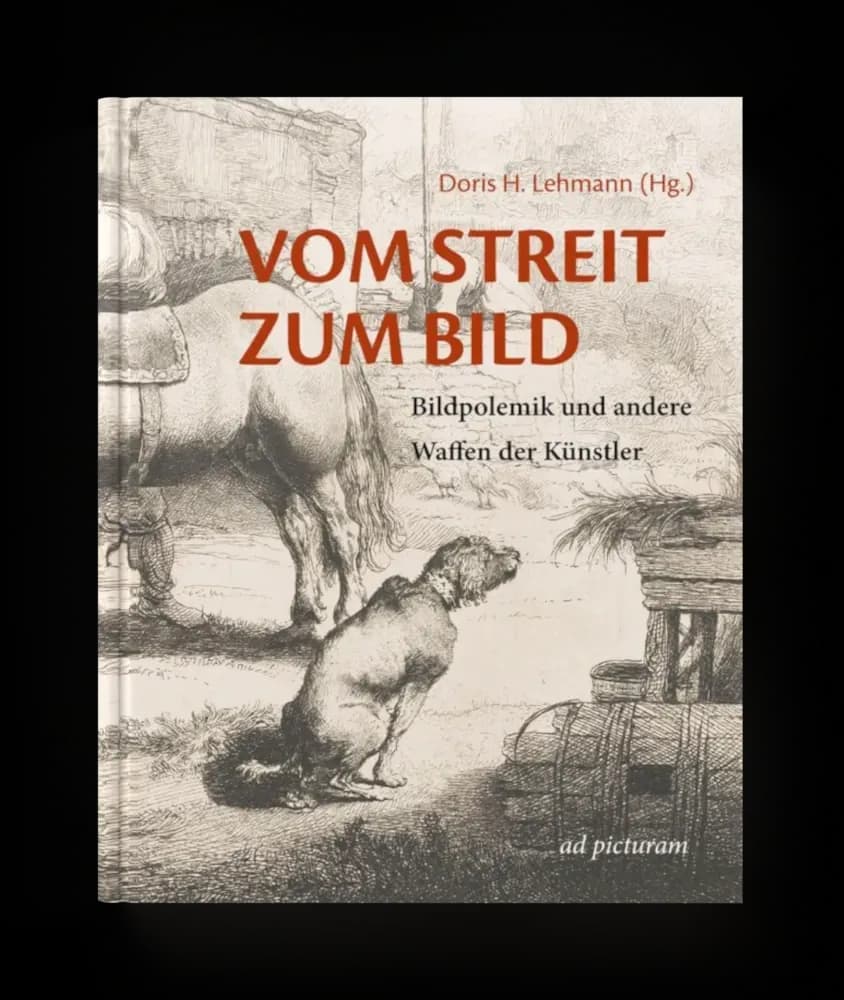
The volume contains contributions by Helen Barr, Giuseppe Capriotti, Cristina Fontcuberta i Famadas, Ekaterini Kepetzis, Petra Kunzelmann, Doris H. Lehmann and Charlotte Mende.
How did visual artists argue with each other and how did they use their works as weapons? How could they show their critics and enemies what they thought of their judgment of art and - if possible without words - ensure that their audience also understood this? Furthermore, how could they punish ignorant clients and insult them with impunity? And what happened if an artist overreacted emotionally and exceeded tolerance limits through irrational actions? Or if an opponent responded?
The anthology of the DFG project “Controversial Strategies of Visual Artists in Modern Times” is dedicated to these and other questions, which is based on the international conference “From Dispute to Image – Image Polemics and Other Weapons of Artists” held at the University of Bonn from December 4th to 5th, 2015. The focus of the discussions here are disputes in which artists instrumentalized and staged their works as a medium for debate. Beyond the already intensively researched aspects of Paragone, Agon, Aemulatio and the artist as criminal, this anthology is dedicated to the phenomenon of artist disputes, taking into account the creative potential released by controversy, its visual traditions and innovations. The range of case studies covered primarily includes examples from the 16th century and extends to the present day.
Two additional texts in the original language (the translations in German are in the volume) are also available online, posted on ART-Dok (Open Access):
Cristina Fontcuberta i Famadas, Envidiosos e ignorantes: iconografías polémicas del mundo artístico en época moderna (s. XVI–XVII), Merzhausen 2017. DOI: 10.11588/artdok.00005211 (original Spanish version)
Giuseppe Capriotti, Armi di difesa. Tre sculture di Benvenuto Cellini per rispondere alle accuse di Baccio Bandinelli, Merzhausen 2017. DOI: 10.11588/artdok.00005212 (Italian original version)
With the kind support of the German Research Foundation