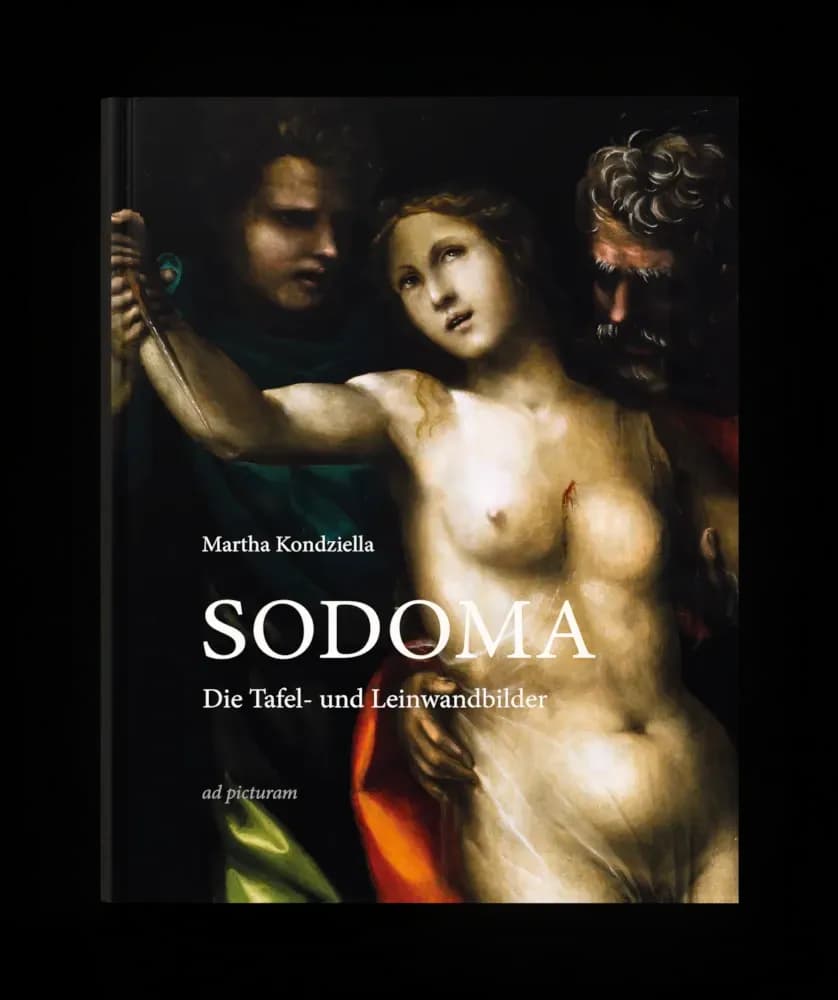
Giovanni Antonio Bazzi, known as Sodoma, is today considered a rather neglected Italian Renaissance painter - even though he had a decisive influence on Siena's art scene in the 16th century. His high position among the artists of the time is reflected in important commissions for leading Italian families and popes.
This publication is the first to deal in detail with Sodoma's panel and canvas paintings. The analysis of these paintings, some of which were previously unpublished, led to new insights into his artistic development, his specific way of dealing with the influences of colleagues and his specific way of working - also by including the drawings, which have hardly been researched to date.
The investigation shows that Sodoma's strength lay in absorbing various impulses, which the painter combined to create something new and his own. It also demonstrates how fruitful interdisciplinary exchange can be in addition to studying the original paintings. With the help of technical research results, questions about the genesis of important devotional images in Sodoma are answered in detail for the first time.
In addition, the publication provides a chronological catalog section in which all of Sodoma's panel and canvas paintings that can be found in museums, churches, private collections and on the art market are recorded, along with the associated graphic works. In addition to brief technical information, provenance information, source and literature references and short descriptions are systematically brought together.
With its findings, the treatise paves the way for further studies on this important artist and, thanks to the comprehensive presentation of his oeuvre of panel and canvas paintings, brings him back into the art and visual science discussion.
The dissertation was awarded the Wetzstein Prize for Art History.