With contributions from
Annkatrin Kaul-Trivolis, Hendrickje Kehlenbeck, Maria Krämer, Gudula Metze, Elisabeth Oy-Marra, Sonja Ruth, Eduard Wätjen, Genevieve Warwick and Friederike Weis
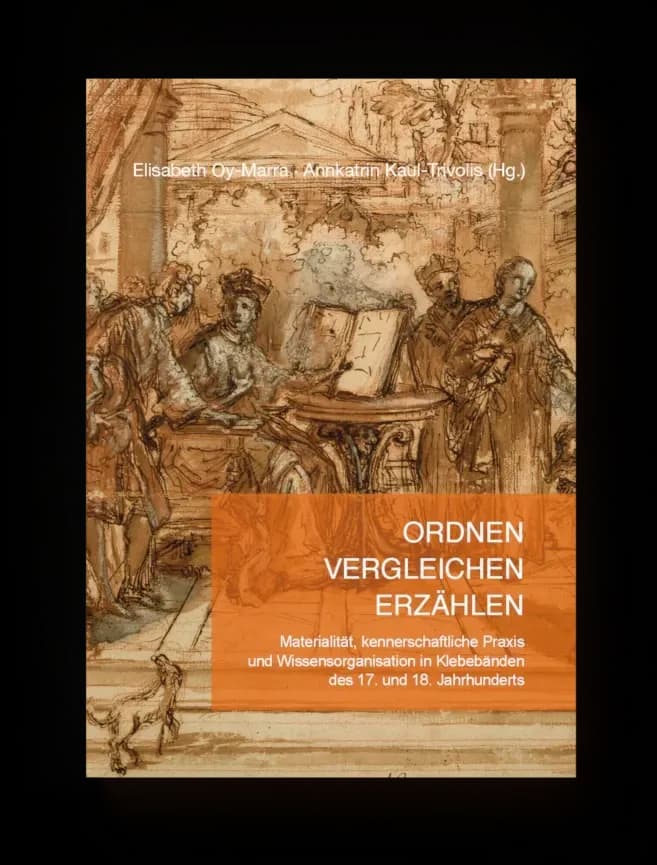
At the beginning of the culture of collecting paper media, drawings were primarily stored in so-called adhesive tapes. Giorgio Vasari's Libro de' Disegni, which is often mentioned in his biographies, is the most famous example of this. It should be 'read' in addition to the biographies. The Libro also shares the fate of later dissolution with many other similar collection volumes. The drawings that were once collected in the book were taken out, stored individually and finally scattered among numerous collections around the world. Due to the mobile storage of sheets in drawers, cardboard boxes and folders that began in the 18th century, only a few adhesive tapes have been preserved in their entirety. This meant that the original proximity of these “paper museums” to books and libraries was lost.
For the genesis of connoisseurship, the adhesive tapes that have been preserved or can still be reconstructed are of inestimable value today, because they bear witness to early modern collecting culture and its classification systems. Arranged according to artists, genres, schools or themes, they provide insights into collection structures and historical drafts, which are illustrated through a conscious selection of drawings and graphics. The pages were also ideal for comparisons and comparisons. Sebastiano Resta (1613–1700) explicitly compared his albums to spaces such as the theater or gallery in which the drawings were performed and the reader was supposed to stroll through the pages.
The essays collected in this volume therefore question the materiality, functions and potential of knowledge creation and organization in this early modern medium. They are based on the lectures that took place at the Organize – Compare – Tell conference. The materiality of adhesive tapes and their functions in the early modern period from January 31st to February 1st, 2020 in the Schloss Wilhelmshöhe Graphic Collection (Hessen Kassel Heritage) as part of the DFG-funded research project The Materiality of Orders of Knowledge and the Epistemes of Drawing. The drawing albums of Sebastiano Resta were kept.
This publication is published with the support of the German Research Foundation